
A written legacy that doesn’t
leave your family guessing.
Work with a professional journalist to create your life portrait – an obituary written with you, not assembled after you’re gone.
Obituaries are often written fast – by family members who are grieving, or by someone working from incomplete information. Even when people do their best, the result can feel thin, generic, or simply wrong in places.
Antelegy offers another way to do it – the story is written earlier, while you can still clarify details, reflect, and decide what you want included. Our storytelling experts conduct interviews, write an engaging narrative profile, and then refine it with your review.
A life captured in full – resulting in a piece your family can rely on. Accurate, complete, and ready to use when the time comes.
How it works

Tell us a little about you
After you select a package, you’ll fill out a few guided forms – basic facts, names, dates, and key chapters in your life. This helps the writer come in prepared and keeps the interviews focused on what matters.
Primary interview
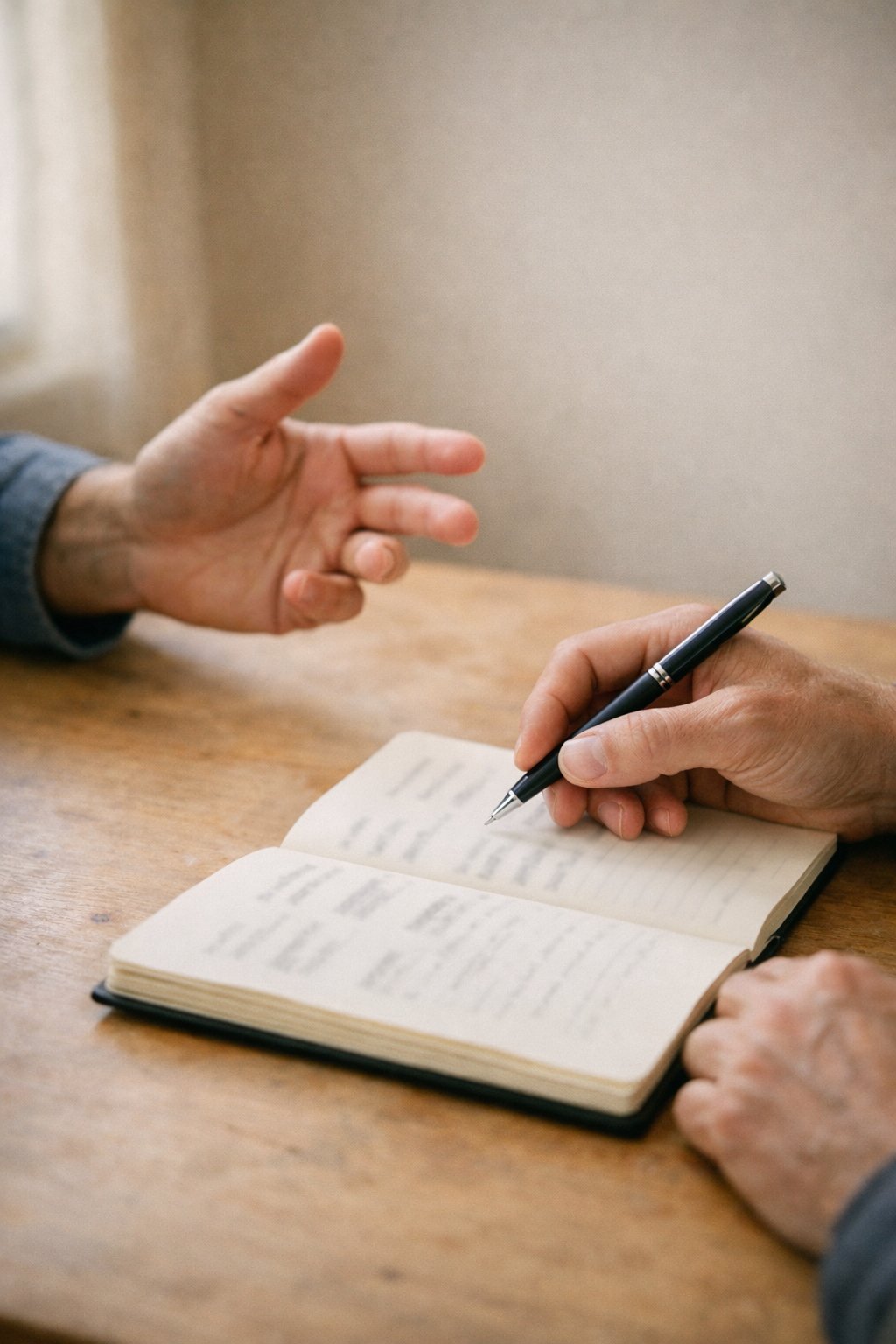
You’ll meet with a journalist for a guided conversation – usually about 30-60 minutes and typically done virtually. You don’t need to prepare anything formal.
Follow-up questions and focus
Our writer reviews the conversation, identifies what deserves more depth, and shapes a second interview around the places where more context or detail would deepen the narrative.
Reflections from close family or friends
Depending on the package a small number of close people may be invited to share brief reflections or quotes. This is discussed with you first and handled with care.
Review and finalize
You review the profile for accuracy and comfort. After revisions, you receive the final document, along with copies of the interviews and transcripts.

What you’ll get
Finished Profile
A polished life profile – delivered as a PDF and editable file your family can keep, share, or adapt as needed.
Interview Archive
Recordings of every interview, plus transcripts – a record of voices your family can return to long after you're gone.
Collaborative Edits
You’ll review drafts for accuracy and completeness, and we’ll revise until it feels right and true to you.
Next Steps
A short, practical guide on what to do next: common places to publish, and how families typically use it.
Two approaches, same thoughtful process
Your story, shaped through conversation. A professional journalist conducts in-depth interviews, then crafts a written portrait of your life – the chapters, relationships, and experiences that define you. Refined with your input to make it feel true to you.
Everything in Solo, plus the perspectives of those who know you best. A small number of close family members or friends are invited to share their reflections – adding perspectives that deepen and enrich the written portrait. The result is your story, seen from the inside and out.
Some stories call for something different.
If neither package feels quite right – whether that's scope, pace, or format – get in touch and we'll shape an approach that fits.
For people who want their story handled thoughtfully, without leaving the work for someone else later.
Antelegy may be right for you if …
You want an obituary that feels true to you, not template-driven.
You’ve seen how difficult it is to write one well, especially under time pressure.
You care about accuracy – names, dates, relationships, and the parts that matter.
You’d like your family to have something finished and usable, not a blank page.
You’re in a reflective season because of age, health, change, or simply planning ahead.
You’re putting thoughtful pieces in place alongside things like estate planning, advance directives, or other practical preparations.
The last thing written about someone becomes the first search result on their life, forever.
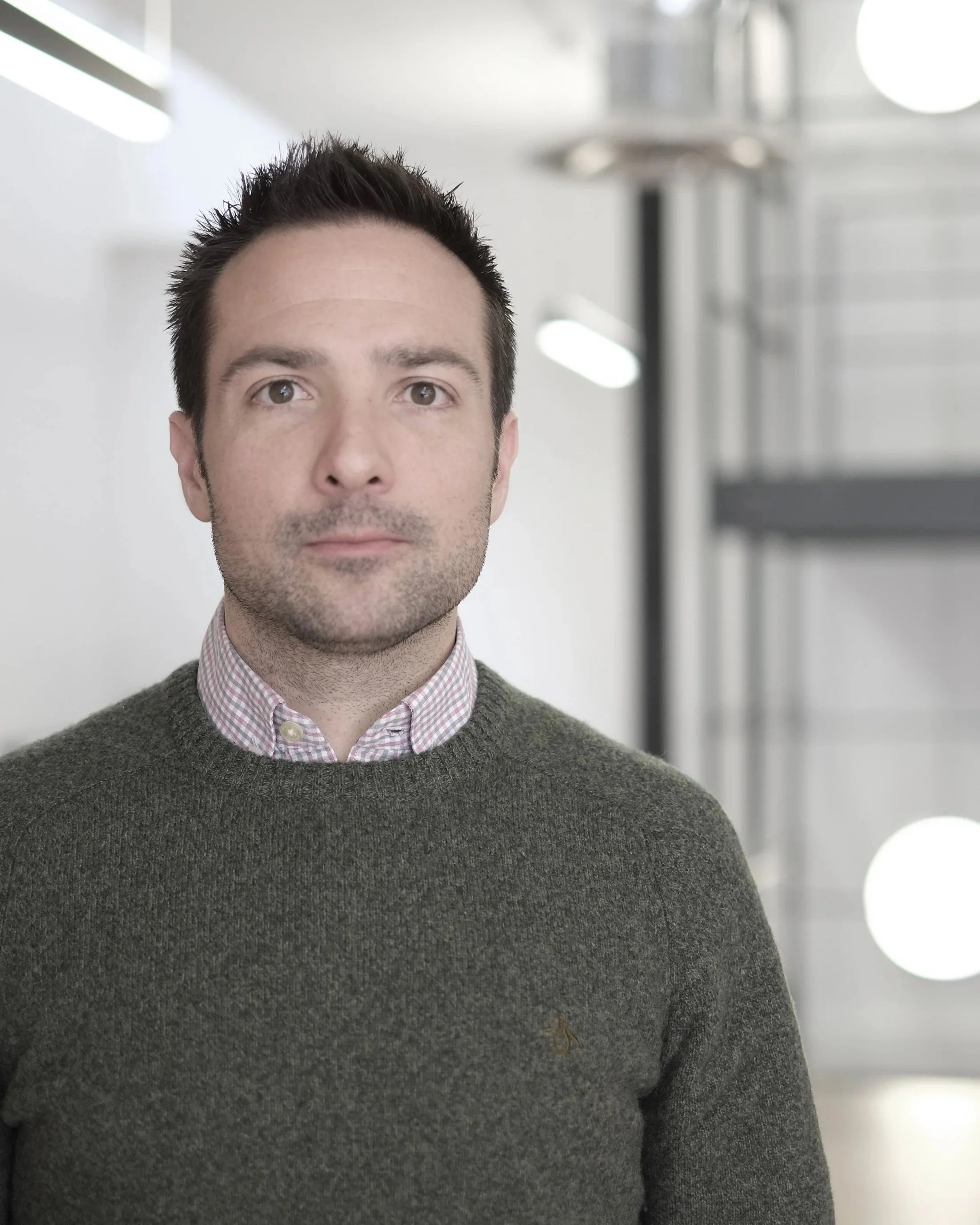
Bill Ehninger founded Antelegy after reading one too many obituaries that didn't come close to capturing the lives he knew were behind them.
The insight was simple – journalists pre-write obituaries for famous people all the time, so something meaningful is ready when the time comes. He believes everyone else deserves the same, and built Antelegy to make that possible.
Bill studied at the Newhouse School of Public Communications at Syracuse University and spent two decades in strategic communications, helping global brands find and tell their stories.
He leads a team of journalists with deep experience telling complex human stories.
-
In practice, yes – but not in the way the word is often used today. Many “obituaries” are short, templated death notices prepared quickly in a difficult time, with limited information at hand. Antelegy is meant to provide something more: a complete life profile written with you in advance through interviews and review. When the time comes, your family can use it in place of a traditional obituary instead of starting from scratch.
-
There isn’t one “right” moment. Some people do it as part of thoughtful planning (alongside things like estate planning or advance directives). Others come to it during a season of change or reflection.
-
AI is a useful tool, particularly for families who need to write an obituary quickly after someone has passed. Antelegy addresses a different need. Rather than assembling a document from facts after death, Antelegy is built around a live conversation – a guided interview with a professional journalist, conducted while you can still reflect, clarify, and decide what you want your story to include. That conversation, and everything it surfaces, is only possible with you in it.
-
That’s normal. The interviews are guided. You don’t need to prepare a speech or have perfect recall – the writer will help draw out what matters.
-
Yes. You review the profile before it’s finalized, and you can correct details, add context, or set boundaries around what feels appropriate to share.
-
If you want – and depending on the package you choose – a select number of close people can offer brief reflections or quotes. This is always discussed with you first.
Your Questions, Answered
-
Most projects take 4-8 weeks from the first interview to final delivery, depending on scheduling and the level of depth. If you have time constraints, the process can be adjusted to move faster.
-
A finished written profile (PDF + editable file), plus digital copies of all interviews, including transcripts, as well as copies of the informational forms you fill out at the start of the process. We also include a short, practical guide to the usual obituary publishing process – common places to publish and the typical steps when the time comes.
-
No. You receive all the final materials and decide where it’s stored and who sees it. We do include a short, practical guide to the typical obituary publishing process, but where and how it’s shared is completely up to you.
-
Your profile is written by a professional journalist with experience in long-form narrative writing. The same person conducts your interviews and writes your profile - there's no handoff to a template or third party.
-
Not necessarily. Many people do this as part of thoughtful planning – alongside estate documents, advance directives, or simply as a reflective exercise. Others come to it because of age or health. Both are common, and the process adapts to meet you where you are.
-
Yes. Some people revisit their profile after major life changes – a move, a new role, a shift in perspective. Others keep it as-is. Either approach is fine. Updates are handled on a case-by-case basis.
Get in touch
If you’re considering this service and want to know more or sign up, send us a note. Questions are welcome, especially the practical ones.